
One-month American West road trip: route, parks, and realistic pacing

The value of this one-month American West itinerary is not only the list of famous stops. The real question is pacing: where to start, which loops are worth keeping, how far north to push, and how to finish without breaking the rhythm of the trip. Here is a structured version of the most useful ideas from the source article.

1. 🗺️ Frame the month properly before you book anything
The source article starts from a useful reality check: one full month in the American West finally gives you room for a real loop instead of a compressed highlight reel. With around 8,500 kilometers, six states, and a long chain of national parks, the route stays intense, but it becomes coherent if you accept that long drives are part of the experience.
Starting in Los Angeles works well for a first major loop. The city is easy to reach, gives you space to absorb jet lag, and lets the trip open gradually before the more isolated desert sections begin. It also makes sense if you plan to finish in San Francisco.
This kind of route should not be built only from a wishlist. The real decision is the loop itself: how to combine the Southwest classics, whether to push north to Grand Teton and Yellowstone, and how to come back through California without collapsing the rhythm.
That is what makes the source article useful. It does not just list stops. It implicitly prioritizes them: cities and accessible desert landscapes first, then the grand parks, then a colder northern detour, and finally a softer ending through the Sierra Nevada and the Pacific coast.
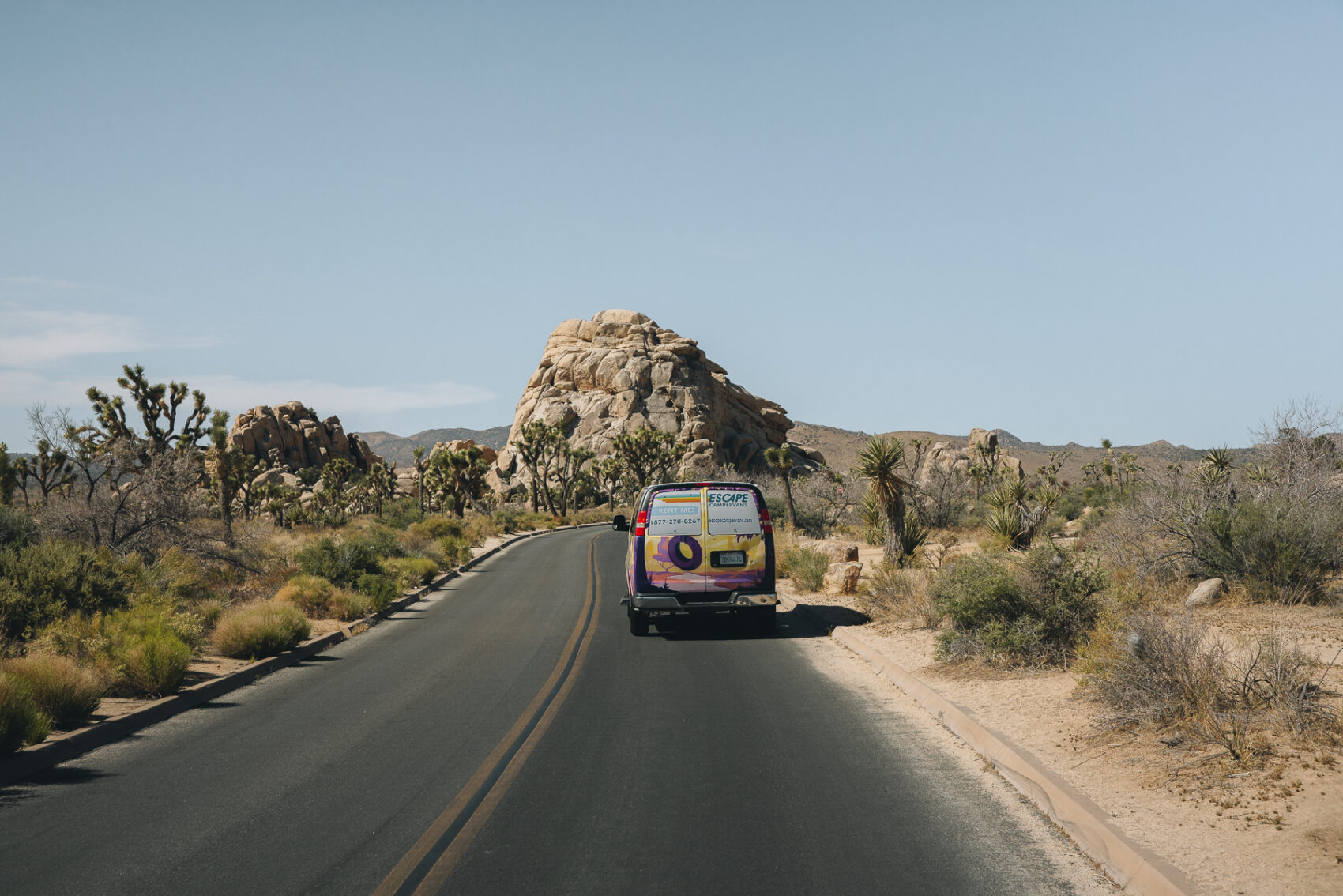
2. 🌴 Los Angeles, Palm Springs, and Joshua Tree as a soft launch
Before the major parks even begin, the article makes a strong case for giving Los Angeles a real starting role. Two or three days are enough to see Hollywood, Beverly Hills, or Venice Beach, but more importantly they stop the road trip from beginning in immediate exhaustion.
The transition toward Palm Springs and Joshua Tree works especially well in a month-long route. You leave the urban environment without jumping straight into the most demanding stages. Palm Springs brings the first desert atmosphere, and Joshua Tree introduces the open roads, rock formations, and dry landscapes that will shape much of the journey.
That progressive opening matters because it sets the pace. Instead of racing into the trip's biggest icons, you let the route build in intensity. Over four weeks, that kind of progression usually makes the entire loop more enjoyable.
Practically, this segment should be treated as a real first chapter rather than as pure transit. It is where you test the vehicle, adjust to American distances, and establish your routine before the more remote sections begin.
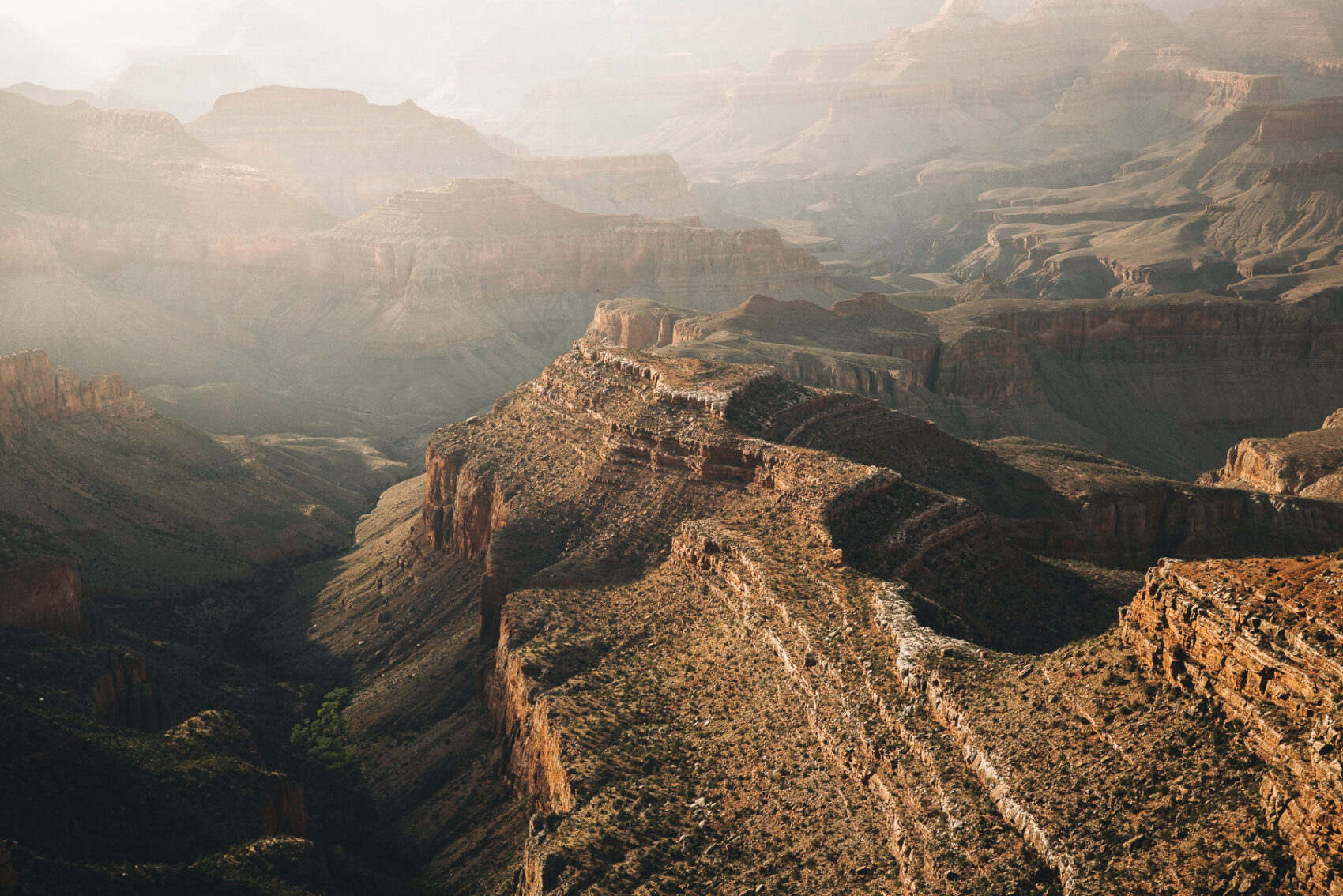
3. 🛣️ Route 66, Grand Canyon, and the first major scenic shock
The article then moves through a very classic sequence that still makes sense for a first American West journey: Route 66 fragments, retro roadside stops, and then the move toward the Grand Canyon. It works because it adds pure road-trip culture before the biggest natural landscapes fully take over.
Stops such as diners, Bagdad Cafe, Seligman, or Kingman are not necessarily the deepest parts of the trip, but they support the story of the route. They give texture to long driving days and help the travel experience feel broader than a checklist of national parks.
The Grand Canyon then becomes the first true scenic summit of the itinerary. The source is right to emphasize the South Rim for a first visit. It is the clearest and most rewarding entry point if you still want to preserve time for what comes next.
This section matters because it confirms the route's identity. You are no longer simply exploring Southern California. You are fully inside a long-form American West road trip where viewpoints, sunset timing, and major landscape transitions drive the experience.
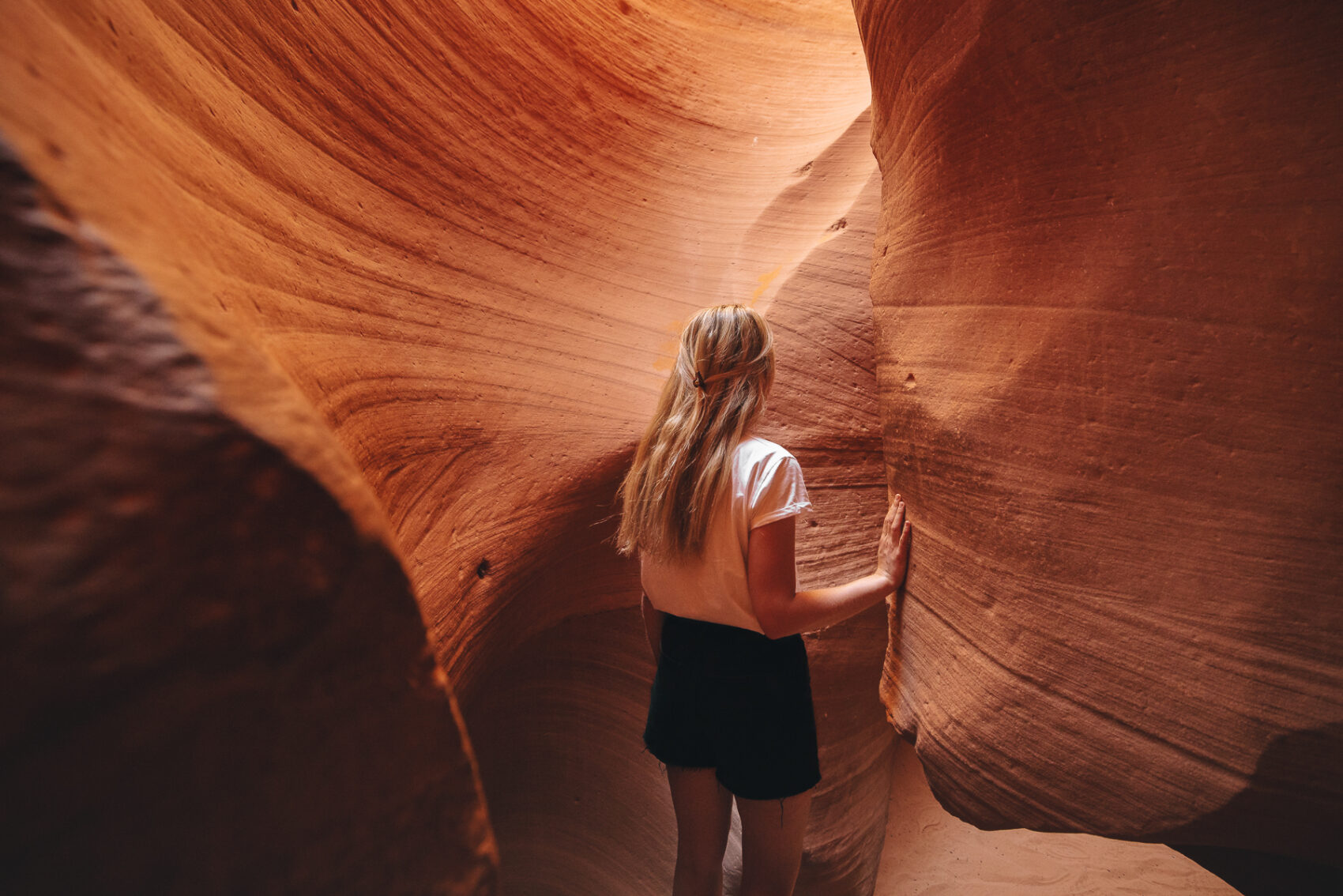
4. 🌄 Page, Antelope Canyon, and Monument Valley as the mythical core
From Page onward, the itinerary enters one of its most image-heavy phases. The source article groups Lake Powell, Antelope Canyon, Horseshoe Bend, and Monument Valley in a way that makes sense because these are some of the most recognizable landscapes of the entire region.
The useful reading here is to avoid treating them as isolated photo stops. Page works as a strong logistical base for two very different experiences: Antelope Canyon, more managed and sculptural, and Horseshoe Bend, far easier to access but just as powerful at sunset.
Monument Valley then changes the emotional scale of the trip. Even before arrival, the scenery starts to shift. The article captures that well: it is not simply another famous viewpoint, but one of those moments when the entire road trip suddenly feels more cinematic.
Over a full month, this block deserves to be embraced as one of the central pillars of the route. It combines long mileage with a continuous sequence of places that very few regions can line up with this much visual force.
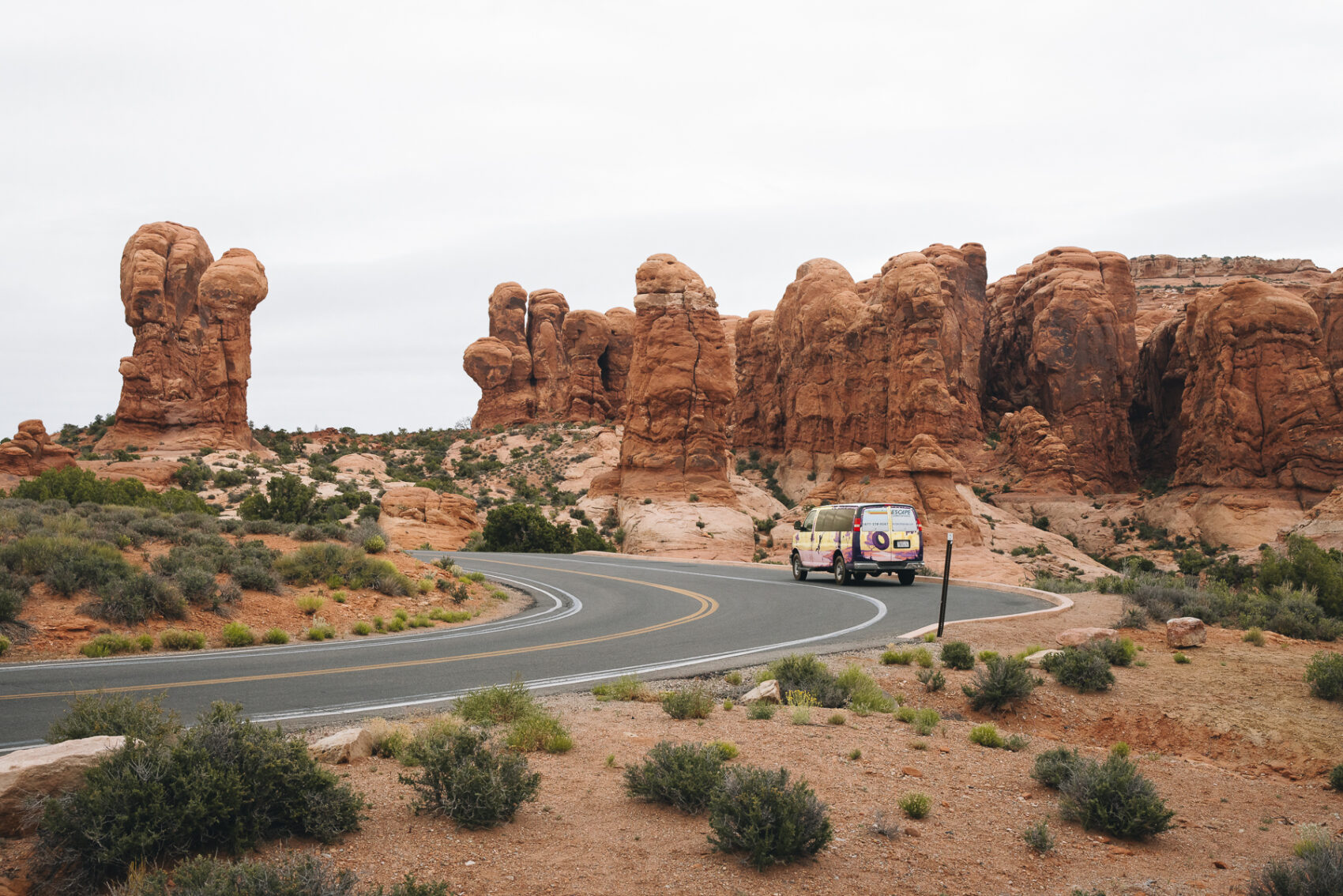
5. 🏜️ Utah and the arches section that reshapes the whole itinerary
The article then extends into Utah and Arches, which is a smart move in a one-month loop. At this stage, the trip is no longer built only around the most obvious icons. It begins to gain more texture through a wider range of geological forms and park atmospheres.
Arches National Park plays a very real role in that structure. Many travelers cut it when time gets tight, yet it brings something visibly different from either Grand Canyon or Monument Valley. Natural arches, red rock windows, and park roads create a fresh visual chapter instead of more of the same.
This section is also where the route begins to demand better energy management. Distances remain long, heat can be intense, and some parks require more anticipation for timed entry, trail timing, or parking than people expect. Over a month, that remains manageable. On a shorter trip, it can become stressful quickly.
In practice, this is one of the chapters that turns a beautiful trip into a truly great road trip. It adds depth, variation, and a better balance between major icons and less expected highlights.
6. 🦬 Is the push to Grand Teton and Yellowstone worth it?
One of the biggest strategic decisions in the source article is the northern extension through Grand Teton and Yellowstone. It is a serious detour in terms of time, and the article reflects that honestly: it consumes a lot of driving, but it also transforms the trip into something much more varied.
Grand Teton provides a sharp break from the red desert logic of the earlier days. Lakes, forests, alpine relief, and wildlife create a very different visual and emotional register. The trip starts to feel less like a pure Southwest loop and more like a broad American landscape crossing.
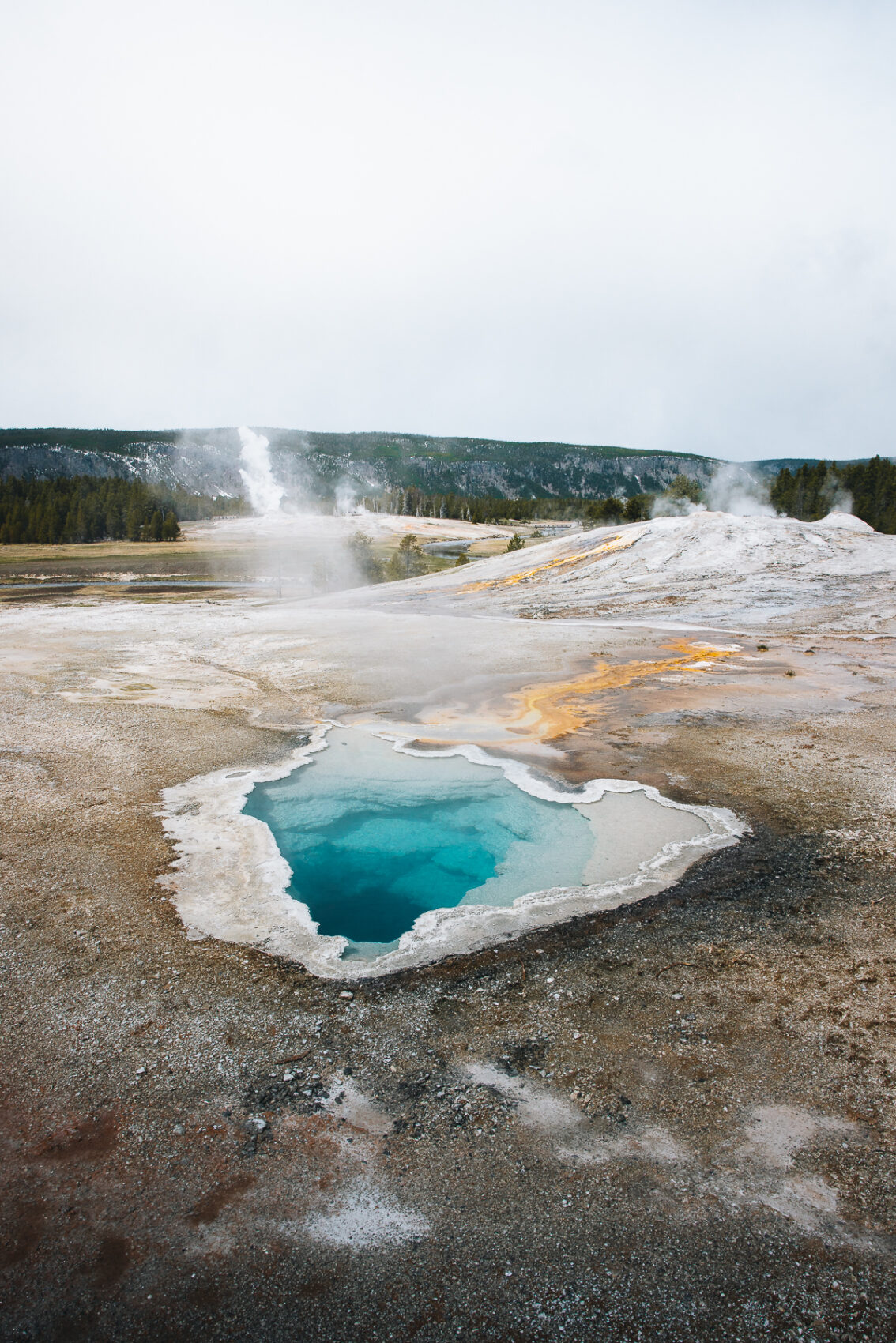
Yellowstone is framed as the northernmost and one of the most exceptional stages of the route. That makes sense. Its geothermal zones, animal life, and sheer scale give the itinerary something you cannot really replace elsewhere.
So the right question is not whether it is beautiful. It is whether your month can absorb the cost of the detour. If you genuinely have four full weeks, it works. If your schedule begins to shrink, this is one of the first extensions that can become too expensive in time and fatigue.
7. 🌅 Bryce Canyon and Zion to close the park loop strongly
After the northern detour, the article swings back toward Utah with Bryce Canyon and Zion. That is a strong way to reconnect the itinerary with its Southwest identity while still keeping two major park experiences for the return leg.
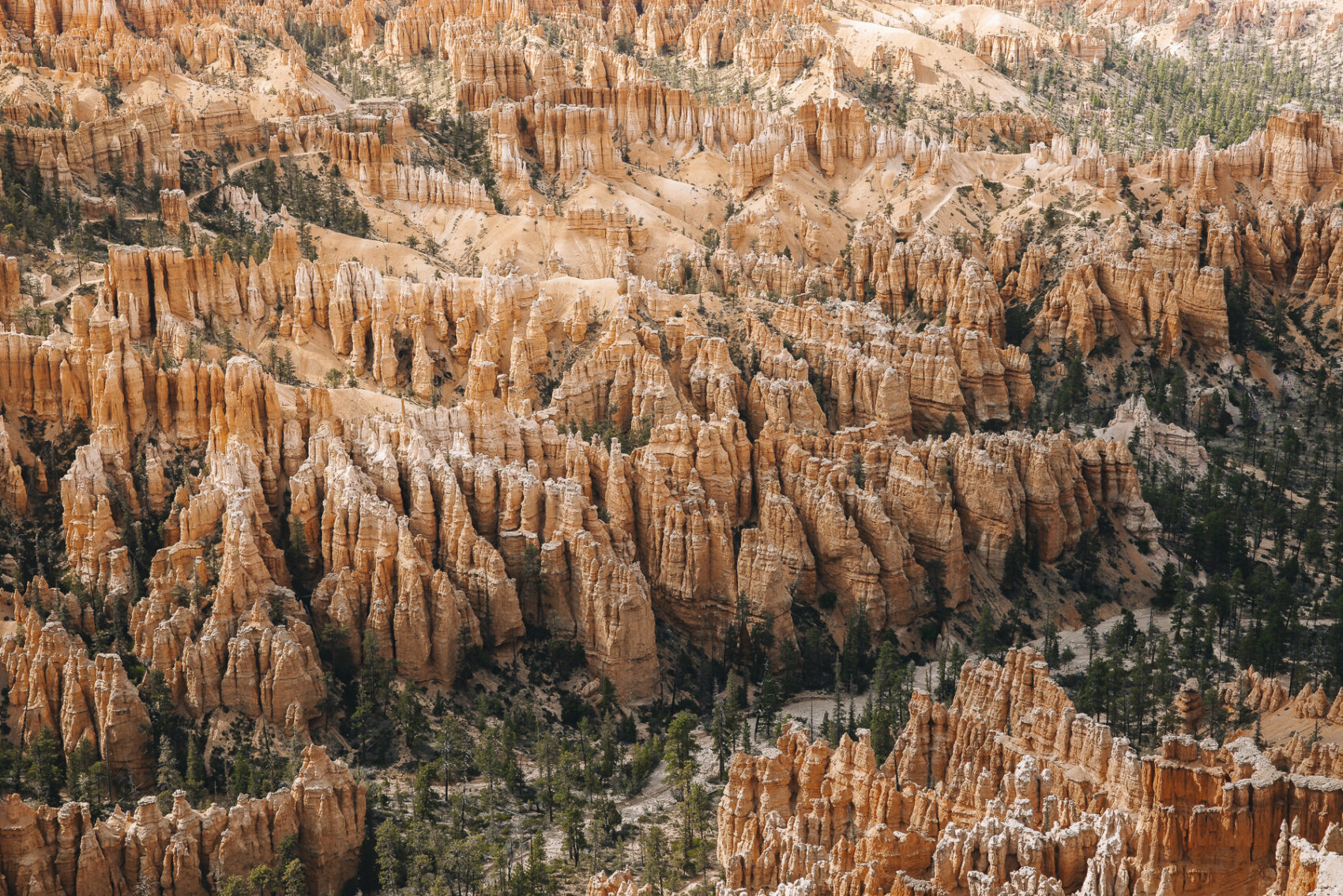
Bryce Canyon works especially well in an itinerary like this because it is visually immediate and relatively easy to integrate. The amphitheater, hoodoos, and viewpoints create a major reward even without a heavy logistical commitment.
Zion changes the mood again. It is more vertical, more trail-oriented, and more physically immersive. The source is right to show that, despite their geographic proximity, Bryce and Zion do not feel alike on the ground at all.
From an itinerary standpoint, this return sequence matters because it prevents the trip from fading out before California. You are not just driving back to the coast. You are still collecting two major stops before the final Sierra Nevada chapter.

8. 🌲 Sequoia, Yosemite, and San Francisco as a controlled landing
The final stretch in the source article links Sequoia, Yosemite, and San Francisco, and it is a strong ending because it changes the visual language of the trip one last time. After canyons, desert, and red rock, you move toward giant forests, granite valleys, and a cooler California landscape.
Sequoia is not always the most logical stop on a map, and the article more or less acknowledges that. Still, if giant sequoias matter to you, it brings something unique into the route that none of the previous parks can replicate.
Yosemite then acts as the last major natural climax before the city finish. Tunnel View, the valley, El Capitan, and the waterfalls give the trip a final scenic high point that often lands emotionally harder than expected.
San Francisco works well as the exit city because it changes the pace rather than trying to outcompete the parks. The source remains fairly measured about the city, which is useful. It does not need to be the trip's biggest highlight to be a smart and practical final contrast after a month on the road.
This one-month American West road trip works because it accepts its long distances while preserving a real narrative arc: entry cities, desert opening, canyon country, major parks, a northern wildlife detour, the Sierra Nevada, and a coastal finish. That coherence matters more than the raw number of famous places on the map.
To turn this United States itinerary into a real group trip, WeTrips helps everyone compare stops, align on budget, and keep the final plan clear in one place.